
Search AMC News
Report: WildBlue Completes Alaska’s First Giant Kelp Cultivation Trial
October 6, 2026
Lead Entities: Southeast Conference
Grant Component: Equipment & Technology
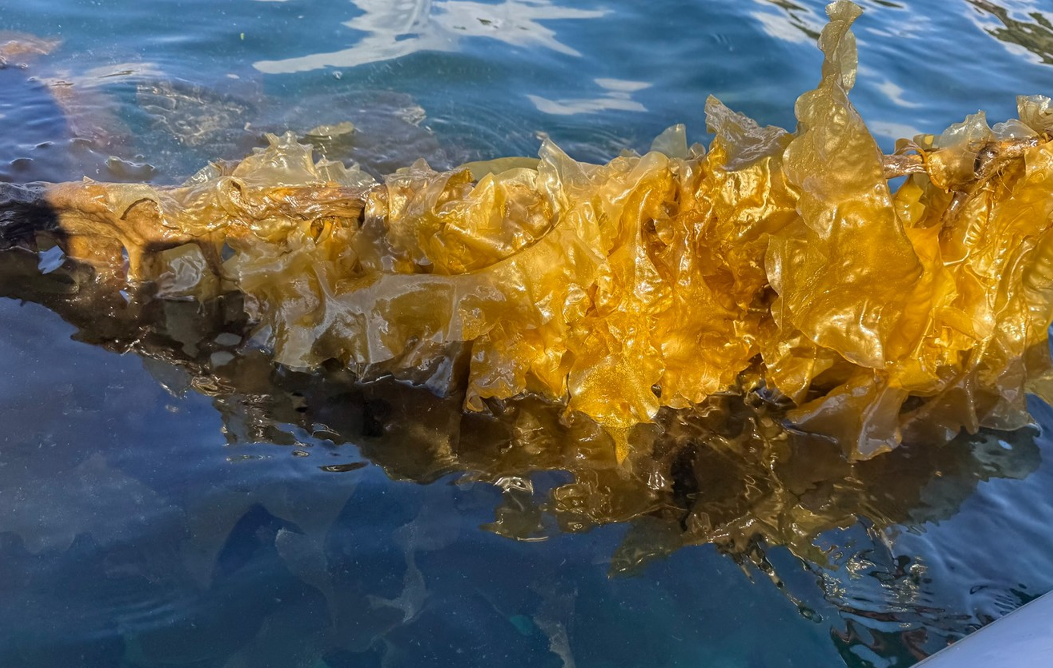
WildBlue Mariculture conducted a pilot cultivation trial of giant kelp (Macrocystis pyrifera) at its commercial kelp farm in Simpson Bay, funded by the AMC grant’s Equipment and Technology program. The trial demonstrated successful establishment and continued growth across four
cultivation arrays. These results provide preliminary evidence that giant kelp can be cultivated at this protected Prince William Sound site, while leaving commercial yield, optimal spacing, and harvest timing unresolved.
WildBlue Mariculture was the first kelp farm in the State of Alaska to outplant Macrocystis pyrifera. This pilot project documents the establishment and cultivation of the species at WildBlue’s commercial farm site in Simpson Bay.
The project deployed approximately 2,000 feet of seeded growline on November 5, 2025, following sorus tissue collection on September 5, 2025. Monthly farm checks continued through July 2026. All four arrays showed moderate to good growth and excellent coverage.
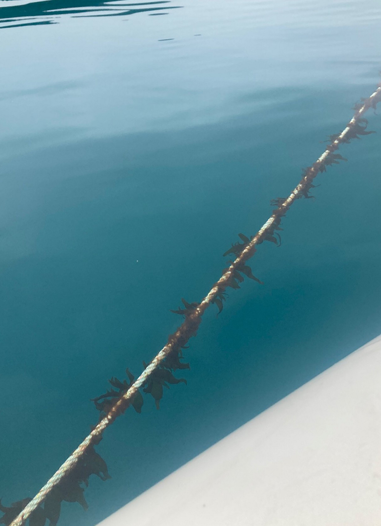
Giant kelp on January 11, 2026
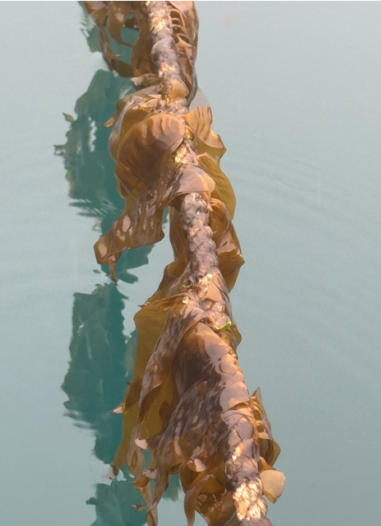
February 1, 2026
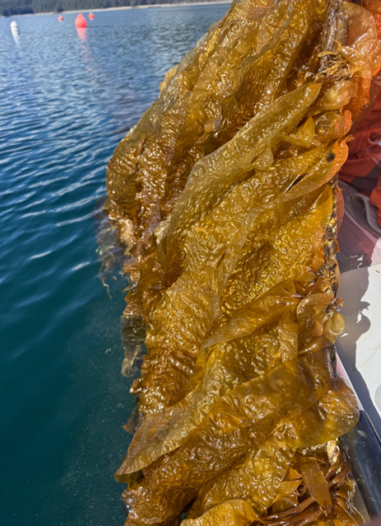
April 21, 2026
Harvest Results and Lessons Learned
On May 14, 2026, WildBlue harvested one of the four cultivation arrays, producing 1,163 pounds of wet giant kelp from 600 feet of growline. While the harvest demonstrated that the species could be successfully cultivated at the site, the yield was below WildBlue’s desired production level.
Throughout the project, WildBlue evaluated kelp growth across four arrays positioned in areas with different levels of exposure. The results suggested that moderately exposed locations may offer favorable growing conditions, while the most protected area experienced the least growth. These findings highlight the importance of site selection and further testing to understand the conditions that support giant kelp cultivation.
The project also identified several opportunities for improving production, including adjusting seedline spacing to reduce overcrowding and exploring later harvest dates to allow additional growth.
In June, WildBlue observed herring spawn covering the remaining kelp, temporarily restricting handling and measurements. By July, the eggs had hatched, but the kelp showed signs of deterioration and slowed growth, bringing the pilot’s monitoring activities to a close.
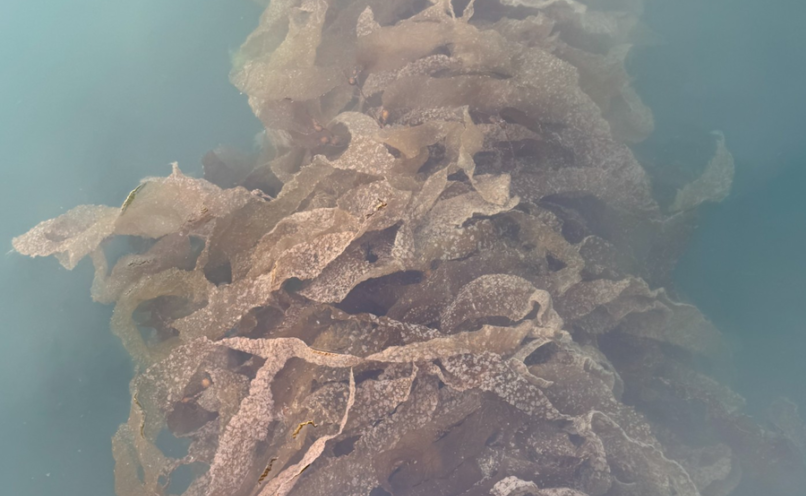
June 19, 2026 – Herring spawn distributed across giant kelp blades
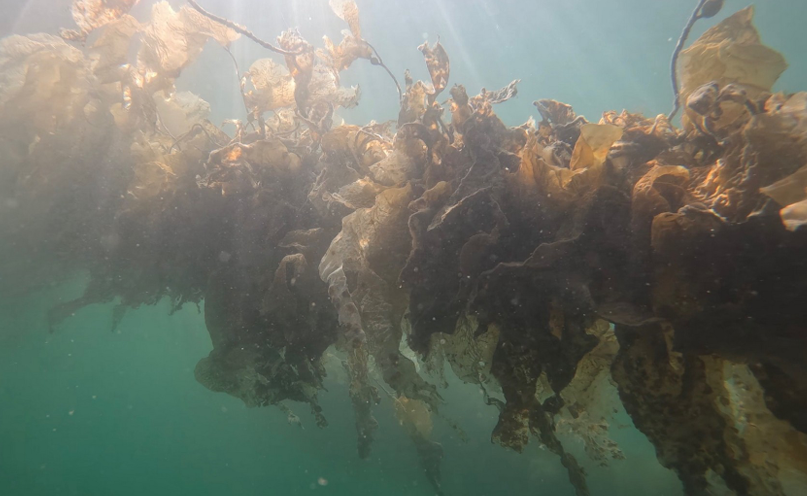
July 11, 2026 – Biofouled Macrocystis observed during the final farm check
The pilot demonstrated that giant kelp can be successfully established and grown at WildBlue’s Simpson Bay farm, though additional trials will be needed to determine whether giant kelp can be cultivated commercially at scale. WildBlue recommends further research into planting density, cultivation site conditions, and harvest timing. The project also identified the potential benefits of testing a two-year cultivation cycle.
WildBlue is also retaining two cultivation arrays in the water for continued observation and potential sale to Prince William Sound kelp pounders. The farm hopes the established holdfasts will support blade growth suitable for sale in March, when blades are needed by local kelp pounders.
About the Alaska Mariculture Cluster
In September 2022, Southeast Conference was awarded a $49 million U.S. Economic Development Administration (EDA) grant to stimulate private investment and grow Alaska’s mariculture industry to $100 million in sales in 10 years. The Alaska Mariculture Cluster grant involves a large coalition of state agencies, Tribes, non-profits, and others working together over a five year period ending May 2027.
