
Search AMC News
DEC Temporarily Pivots from PST to DST Testing to Support Mariculture Industry
October 20, 2025
Lead Entities: Alaska Department of Environmental Conservation
Grant Component: Equipment & Technology
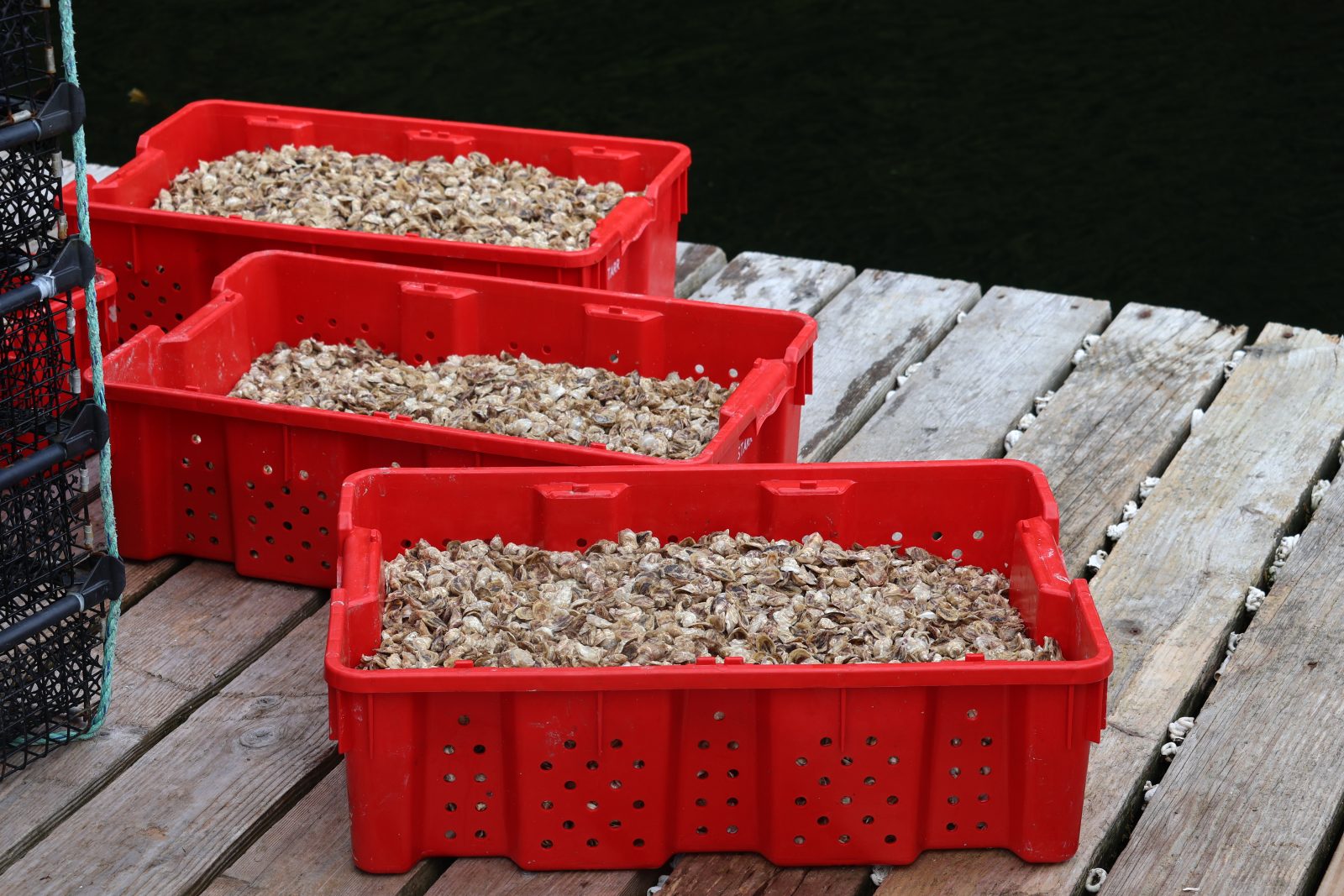
The Alaska Department of Environmental Conservation (DEC) is making a critical adjustment to protect Alaska’s mariculture industry and consumers. DEC is temporarily redirecting its toxin testing method development efforts (funded through the Alaska Mariculture Cluster) from Paralytic Shellfish Toxins (PST) to Diarrhetic Shellfish Toxins (DST).
The DEC Environmental Health Laboratory is currently deploying recently-acquired toxin testing equipment (UHPLC-MS/MS) to validate DST testing methods. This equipment and project is being funded by the DEC subaward, which received $4.1 million in 2022 under the AMC’s Equipment & Technology grant component. The goal of the Equipment & Technology grant component is to address key barriers to mariculture growth and to explore new methods and equipment to overcome those barriers. One critical obstacle to mariculture growth is shellfish toxin testing capacity, speed, and sustainability. Using new equipment, DEC is working to eliminate the need for testing with live mice and dramatically increase testing speeds and cost efficiency.
This decision to temporarily pivot the focus of DEC’s AMC funding reflects an urgent need: DST toxins, including okadaic acid, in Southeast and Southcentral Alaskan waters during 2024 were tested at levels near federal regulatory limits. The toxins were not found on farmed shellfish or at permitted farms; however, if these toxins become prevalent they could threaten consumer safety, disrupt interstate shellfish sales, and jeopardize Alaska’s standing with federal regulators.
DEC will resume work on PST testing once finished with DST testing. Ultimately, Alaska will gain dual-capacity toxin testing that can serve the industry for decades to come.
This comprehensive approach not only protects consumers but also strengthens industry confidence. Reliable, in-state testing capacity reduces uncertainty for farmers and processors, making it easier to attract investment and scale mariculture production. As the mariculture industry works toward ambitious growth targets, investments in toxin testing capacity will remain a cornerstone—keeping products safe, markets open, and Alaska’s mariculture sector positioned for long-term success.
It’s important to note that Alaska has a strong and successful food safety program. Commercial oyster operations are rigorously tested for PST, and consumers can be assured that commercially available oysters are safe when purchased from reputable retail stores and restaurants.
About DEC’s Subaward
In 2022, DEC was awarded $4.1 million to strengthen Alaska’s mariculture industry. Specifically, DEC’s Environmental Health Laboratory (EHL) is purchasing new equipment for PST testing, training staff on their use, and validating methods with regulators. More information about the Environmental Health Laboratory can be found here.
About the Alaska Mariculture Cluster
In September 2022, Southeast Conference was awarded a $49 million U.S. Economic Development Administration (EDA) grant to stimulate private investment and grow Alaska’s mariculture industry to $100 million in sales in 10 years. The Alaska Mariculture Cluster grant involves a large coalition of state agencies, Tribes, non-profits, and others working together over a five year period ending May 2027.
