
Search AMC News
AMC Monthly Update: October 2026
November 13, 2026
Lead Entities: Southeast Conference
Grant Component: Grant Administration
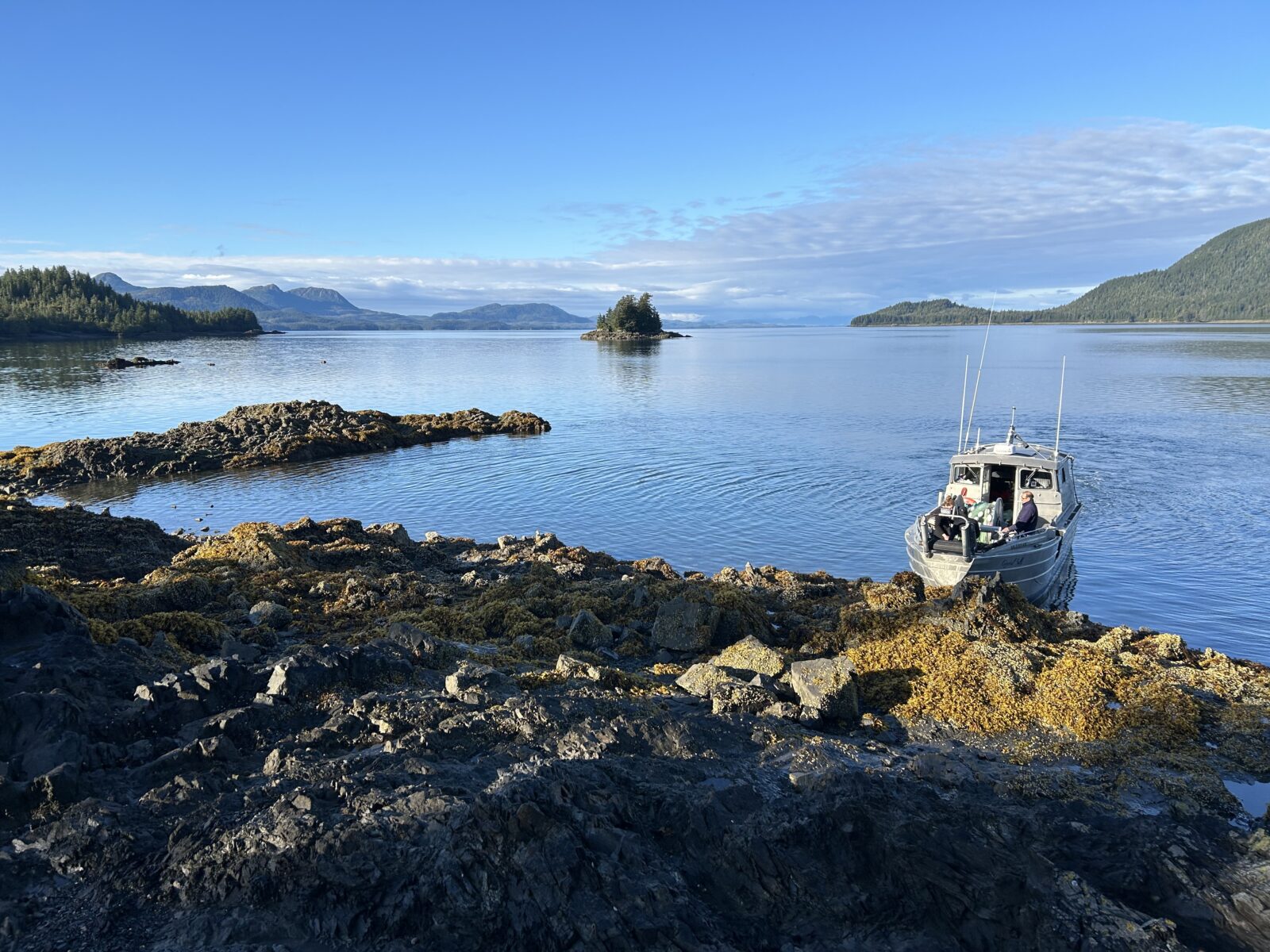
October 2026 brought continued progress across the Alaska Mariculture Cluster (AMC), with advancements in kelp cultivation research, expanded business development resources, new infrastructure investments, and efforts to strengthen market opportunities for Alaska’s mariculture industry. From Alaska’s first giant kelp cultivation trial and new farm engineering consultation services to expanded lending partnerships, innovative kelp seeding techniques, and national marketing efforts for Alaska oysters, AMC partners continue to support industry growth through research, technical assistance, financing, and market development. Use the links below to jump ahead.
- Alaska’s First Giant Kelp Cultivation Trial
- Site Characterization & Engineering Consultations
- Floating Mariculture Lab Arrives in Sitka
- Completed Research on Kelp Direct Seeding Techniques
- Revolving Loan Fund Welcomes New Lending Partners
- Biostimulant Regulatory Roadmap
- Alaska Oysters at DRINK Las Vegas
WildBlue Mariculture completed a pilot cultivation trial of giant kelp (Macrocystis pyrifera) at its commercial kelp farm in Simpson Bay, becoming the first kelp farm in the State of Alaska to outplant the crop. The results of the trial provide preliminary evidence that giant kelp can be cultivated at this Prince William Sound site.
The pilot project deployed approximately 2,000 feet of seeded growline across four cultivation arrays, demonstrating successful establishment and growth of giant kelp in Alaska waters. A May 2026 harvest produced 1,163 pounds of wet kelp from 600 feet of growline. While yields fell below commercial targets, the trial provided valuable insights into site conditions, planting density, and harvest timing that could inform future cultivation efforts.
The pilot, funded by AMC’s Equipment and Technology component, demonstrated that giant kelp can be successfully established and grown at WildBlue’s Simpson Bay farm. Additional trials and further research into planting density, cultivation site conditions, and harvest timing is recommended in order to determine whether giant kelp can be cultivated commercially at scale.
Funded through the Revolving Loan Fund (RLF) component, the Alaska Mariculture Cluster (AMC) has contracted Kelson Marine, an ocean engineering firm, to provide free technical assistance to prospective and existing mariculture farmers across Alaska. The goal of these consultation services is to help farmers and investors evaluate site conditions, right-size farm designs, and make more informed decisions.
The technical assistance provided includes initial farm site characterization and in-depth site selection and farm engineering. This way, farmers can improve business planning and financing readiness.
Kelson Marine will also host a virtual workshop introducing its technical resources and will participate in the 2027 Mariculture Conference of Alaska to demonstrate how farmers can use environmental data and modeling tools to inform their operations.
The University of Alaska Southeast (UAS) Sitka campus welcomed a new floating mariculture laboratory on September 18th, following a three-day tow from Ketchikan, where it was purchased from the nonprofit OceansAlaska.
The lab will expand opportunities for hands-on workforce training, aquaculture research, and shellfish and seaweed seed production. Supported in part by the Alaska Mariculture Cluster (AMC), the facility represents an important investment in the infrastructure and workforce needed to support Alaska’s growing mariculture industry.
As part of the AMC-funded Kelp Seed Quality Improvement Program, the Chugach Regional Resources Commission (CRRC), through its Alutiiq Pride Marine Institute, completed a research project evaluating alternative kelp seeding techniques geared towards reducing hatchery costs, improving seed availability, and streamlining farm operations.
The project compared traditional twine-based seeding with direct seeding methods at two sites in Kachemak Bay, testing differences in growth, yield, and seed retention. While traditional twine seeding produced higher overall yields, direct seeding successfully cultivated sugar kelp, achieving yields of up to 5.55 kilograms per meter of line.
The project was an important step towards making direct seeding a commercially viable option for Alaska’s kelp farmers and supported continued development of CRRC’s gametophyte hatchery program, which received approval from the Alaska Department of Fish and Game in April 2026 to use propagated, multi-year gametophyte cultures for commercial seed production.
The AMC welcomed First Bank and the Alaska Division of Agriculture as new lending partners in its Revolving Loan Fund program. They join existing partners Northrim Bank and Spruce Root in expanding financing opportunities for Alaska’s mariculture industry.
The RLF helps oyster and kelp businesses overcome barriers to financing by providing collateral support for loans issued through participating lenders. Financing can support startup costs, equipment purchases, working capital, business expansion, and other mariculture-related investments.
With four participating lending partners, the program offers farmers and processors additional options to access capital and support business growth.
As part of its AMC-funded Kelp Agricultural Product Development project, Pacific Kelp Company partnered with Kuhn Sustainability Solutions to publish a comprehensive regulatory roadmap for registering seaweed-derived agricultural inputs across all 50 states.
Seaweed-based biostimulants and fertilizers face a complex regulatory landscape, with varying state requirements for product classification, registration, labeling, and reporting. The new 50-State Strategy Guide examines these requirements and identifies potential registration pathways for companies seeking to bring kelp-based agricultural products to market.
The report provides a valuable resource for Alaska businesses developing seaweed-derived agricultural products, helping them navigate regulatory requirements and pursue opportunities in domestic agricultural markets.
The AMC Marketing Program brought Alaska-grown oysters to the inaugural DRINK Las Vegas food and drink festival in September, connecting Alaska’s oyster industry with prominent chefs, restaurant groups, and seafood buyers.
As the festival’s premier oyster partner, Alaska Oysters were exclusively featured across six events, with more than 2,250 oysters served to guests. The promotional effort introduced Alaska products to influential culinary professionals, including representatives from MGM Resorts, celebrity chefs, and seafood distributors serving major restaurant markets.
The event created opportunities for follow-up conversations between interested buyers and Alaska oyster farms capable of supplying Las Vegas and other Lower 48 markets. Coordinated by Tastemaker Comms and Rising Tide Communications, the activation was part of the AMC Marketing Program’s broader efforts to increase awareness, demand, and market access for Alaska-grown shellfish.
More Marketing Program News
