
Search AMC News
AMC Monthly Update: April 2026
April 29, 2026
Lead Entities: Southeast Conference
Grant Component: Grant Administration
In 2026, the Alaska Mariculture Cluster (AMC) continues its work to strengthen the mariculture industry in Alaska. Each of the grant’s component projects is progressing steadily, and the coalition is working to catalyze the industry for the long-term benefit of Alaska’s economy, environment, and communities. As the grant enters its final year, stay up to date on programs and projects by clicking below to read more.
Component #1: Revolving Loan Fund
The RLF addresses lending barriers within the mariculture industry by offering collateral support to lending institutions for borrowers who do not qualify for traditional loans. Mariculture businesses are able to apply for loans with Northrim Bank and Spruce Root.
Through the AMC’s Mariculture Business Planning Tools RFP, SEC has contracted with GreenWave to offer free individualized consulting services to all active Alaskan kelp farmers and processors. GreenWave has offered these services on a limited basis but is now able to extend them to the entire industry in Alaska thanks to AMC funding. The Mariculture Business Planning Tool Program will complement existing business planning and technical assistance resources offered by Spruce Root and Alaska Sea Grant. The purpose of this work is to improve participating businesses’ understanding of their financial operations and to strengthen their ability to access capital for business growth and investment.
Component #2: Governance, Coordination, & Outreach
The AMC Governance Body continues to be a valuable opportunity for connection and collaboration across the industry. Members met in Juneau on April 8 to discuss grant progress, hear updates from partners, and synthesize industry plans. This month’s meeting covered upcoming summer events, plans for harvests, and updates from a variety of projects. The Mariculture Equipment Program and Marketing Program were discussed in detail. Please refer to the component #5 and #7 sections for more information.
SEC continues to work closely with the AMA, attending board meetings and participating in two biweekly meeting series: one with AMA staff, regional Mariculture Liaisons, and the EDDs (KPEDD, PWSEDD, and SWAMC); one with just AMA and the regional Mariculture Liaisons.
KPEDD, PWSEDD, SEC, and SWAMC continue to work with industry partners, stakeholders, and AMA Liaisons to facilitate communication, events, and project development. All other EDDs are working closely with their regions’ mariculture organizations and liaisons, including planning community mariculture events for Summer and Fall 2026. These events will be supported by AMA, SEC, and the AMC Marketing Program, and will be announced as finalized.
Component #3: Workforce Development
The AMC’s Workforce Development program is primarily led by the University of Alaska Fairbanks (UAF) Alaska Sea Grant, University of Alaska Southeast (UAS) Sitka, and the University of Alaska Anchorage (UAA) Prince William Sound College. All three institutions have trainings, workshops, and college courses offered in their region and UAF / Alaska Sea Grant has statewide coverage.
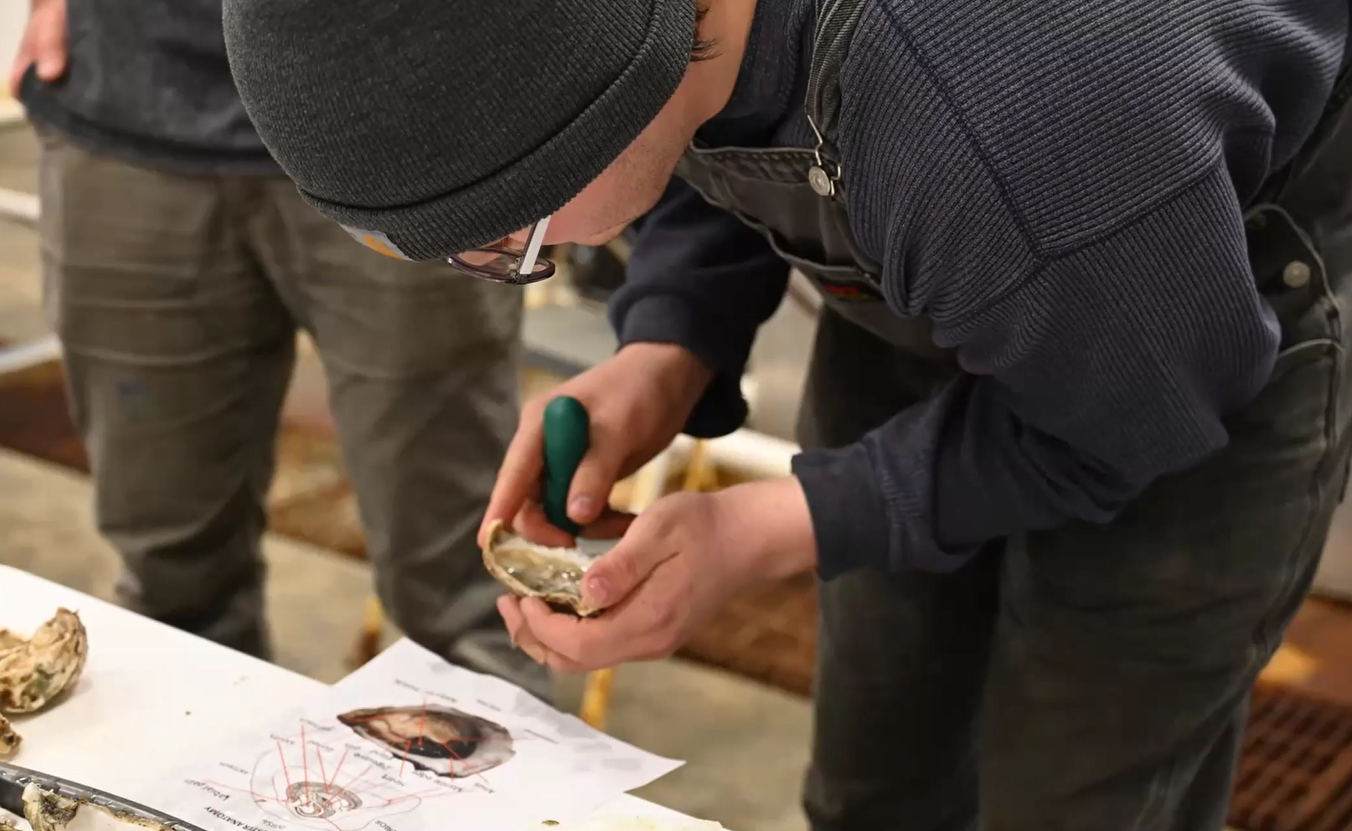
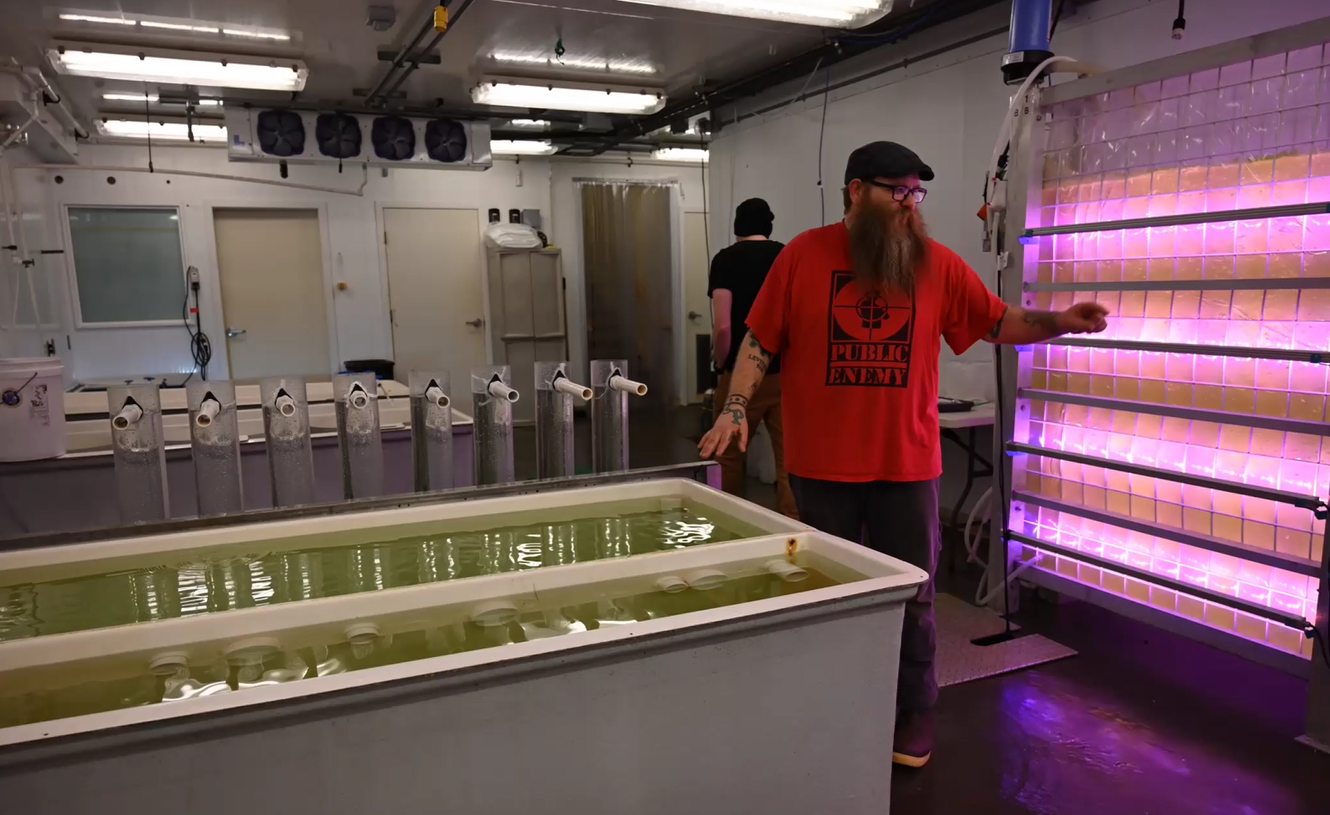
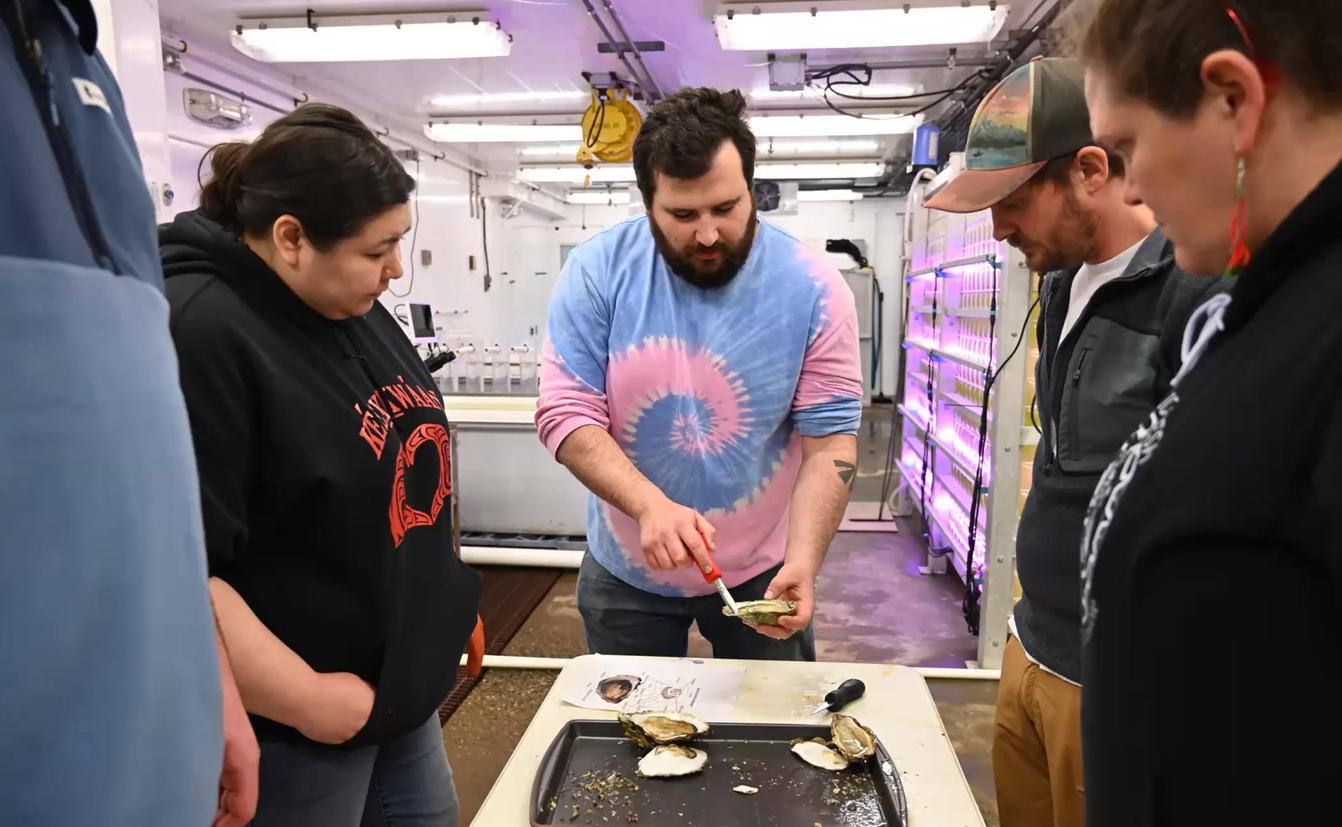
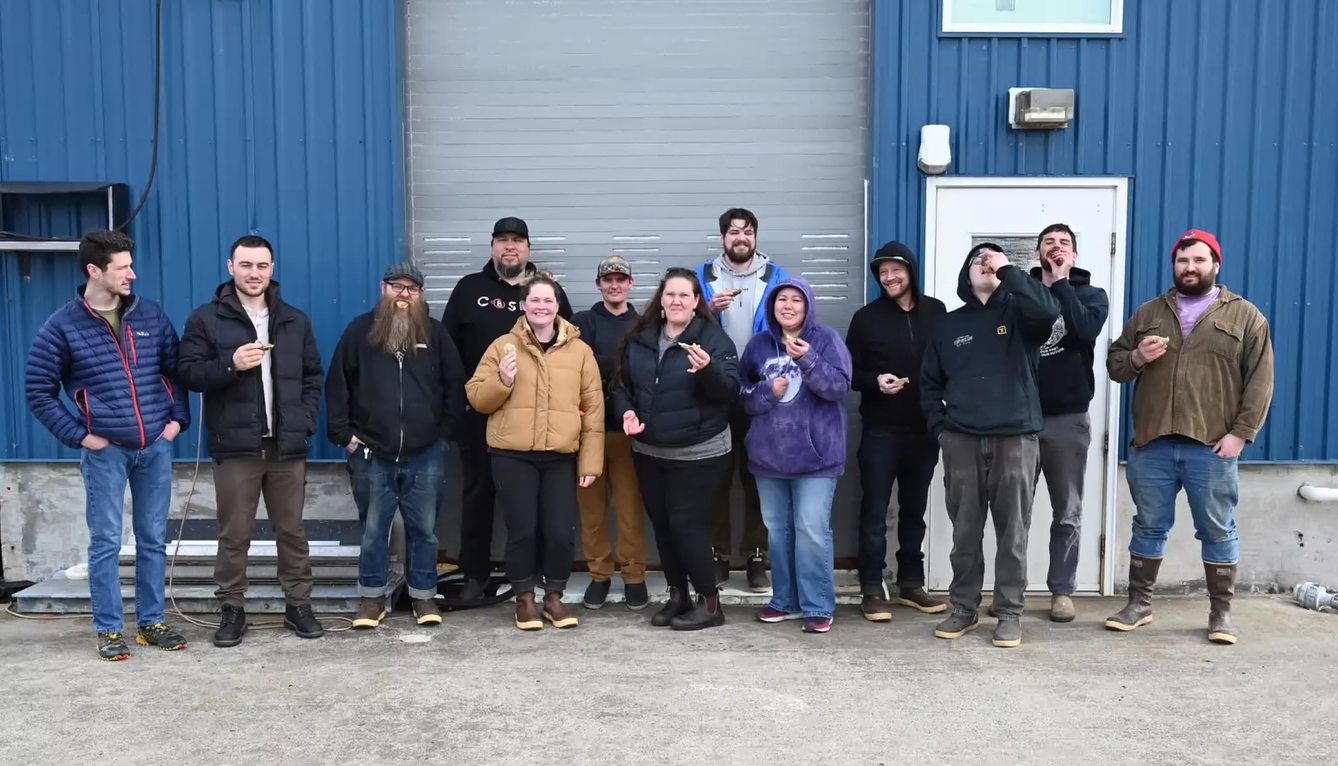
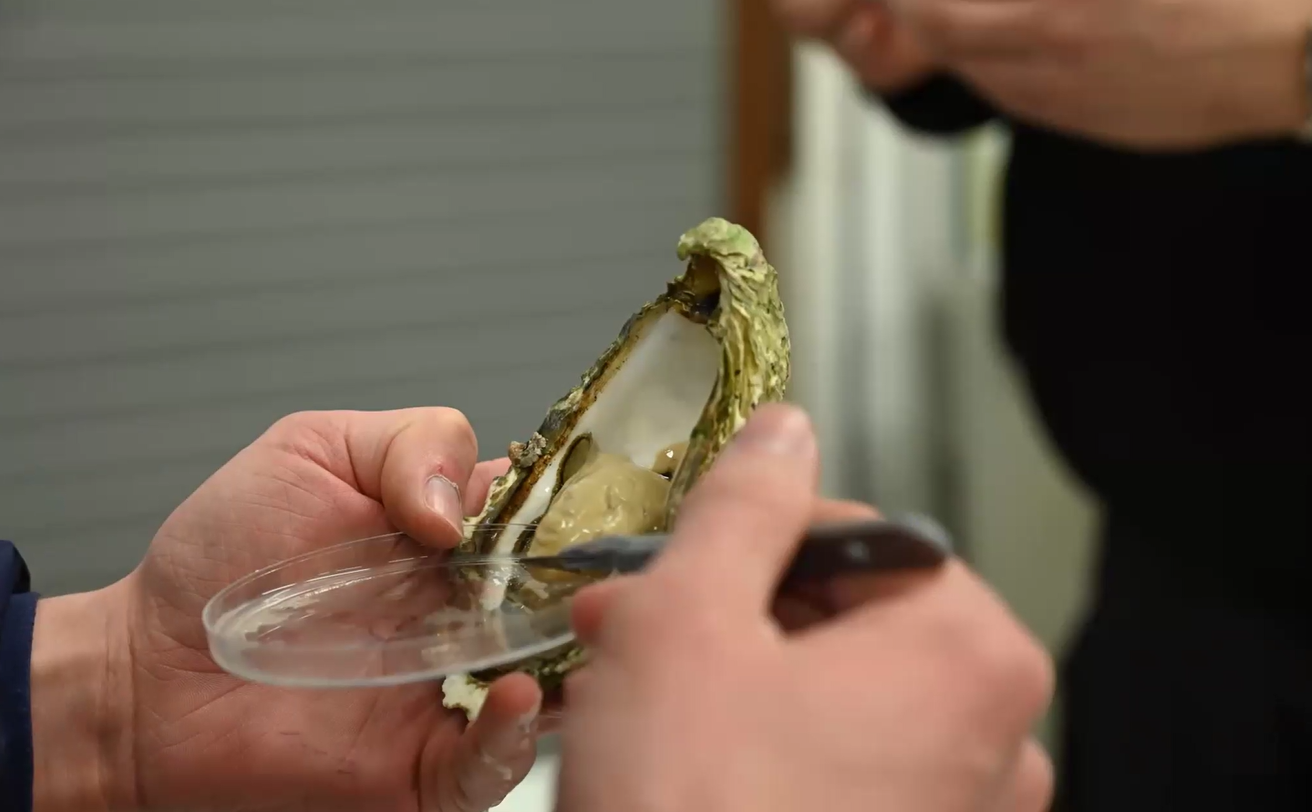
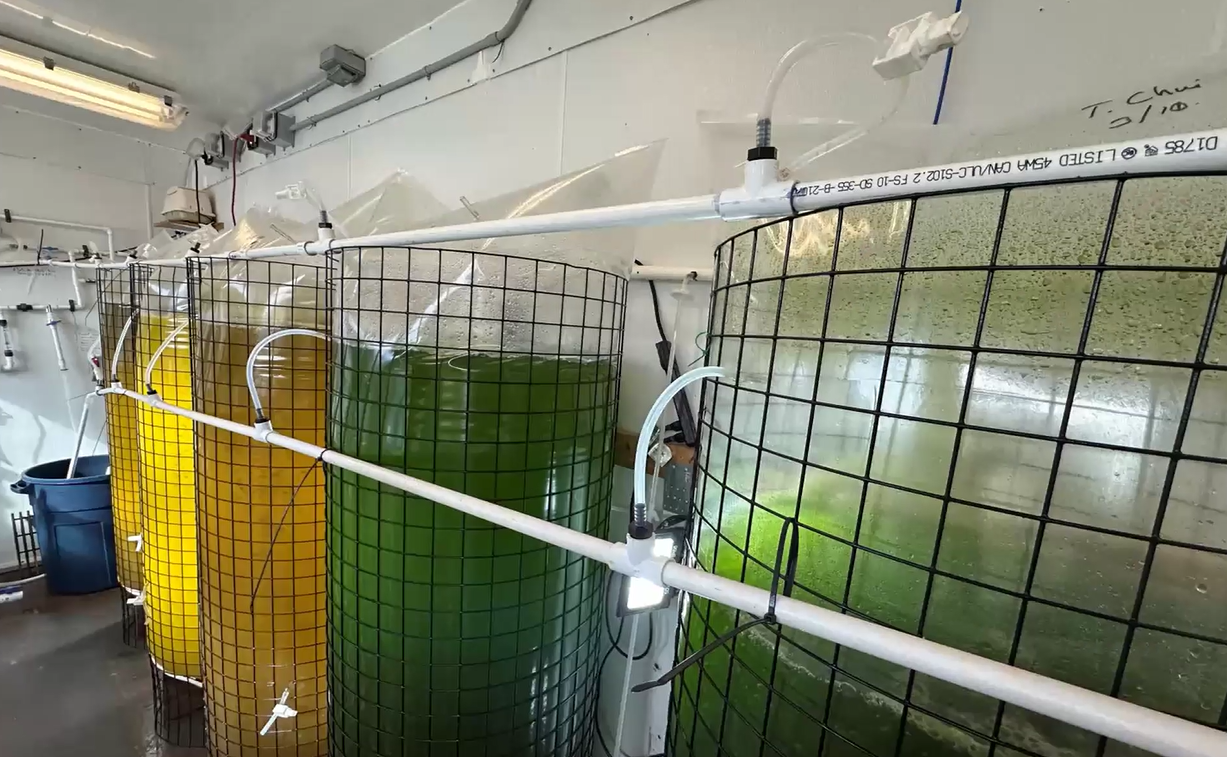
At the beginning of April, UAS and OceansAlaska hosted their Hands-On Farm Training Oyster Hatchery Workshop in Ketchikan. This workshop provided comprehensive, hands-on training across the full hatchery and farming cycle, including microalgae production, broodstock conditioning, spawning, larval and seed rearing, nursery techniques, and Alaska-specific farming methods. OceansAlaska also hosted a community event in Ketchikan to share information about the hatchery workshop. The workshop was a major success!
Component #4: Research & Development
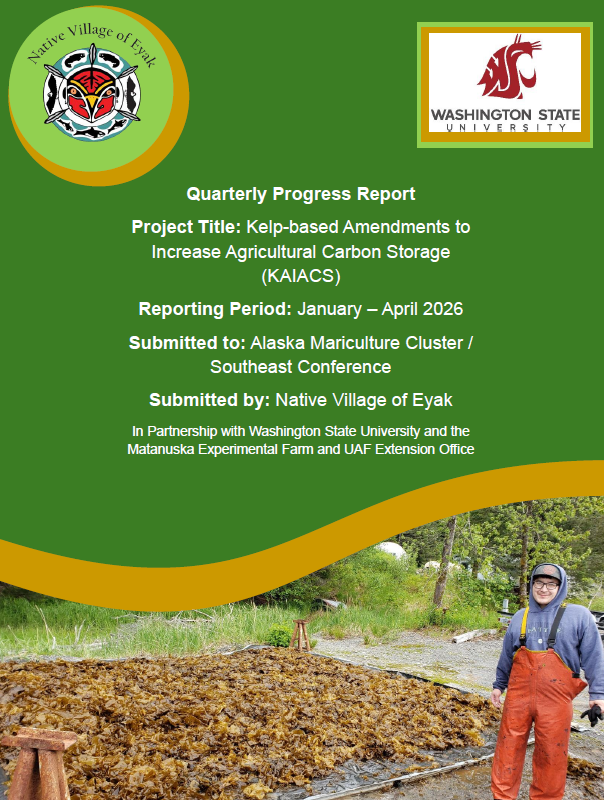
In April, projects under Component Project #4: Research and Development took advantage of the warming weather and prepared for summer research activities. One Carbon Sequestration project, led by the Native Village of Eyak (NVE), produced a detailed and informative report. This project is looking at how kelp-based soil amendments can enhance carbon storage and soil health in Alaska’s agricultural systems. In April (and the preceding months), the project completed laboratory incubation experiments and prepared for field trials during the 2026 growing season. A main conclusion drawn from this project was that a combination of kelp and cardboard is an effective way to boost microbial activity (respiration and biomass production), which has promising implications for kelp’s role in agriculture. Read the entire report here (right) or on the Carbon Sequestration project page.
Component #5: Market Development
The AMC Marketing Program, which is collaboratively managed by AMA and SEC, continues to make impactful progress towards implementing valuable marketing material for Alaska’s mariculture industry. The Marketing Program is marketing its new logo and brand system, which is beginning to be utilized across AMC marketing efforts, from websites and trade shows to PR, marketing materials, and more. Since being released in February, products showcasing Alaska Mariculture logos have appeared at various industry events in the form of sweatshirts, stickers, pens, and more.
Katie Goldberg, Tastemaker Comms, attended the April Governance Body meeting to provide an update on the marketing program:
Component #6: Green Energy
In April, the Green Energy in Mariculture (GEM) project continued working on two papers to be submitted next month that look at energy associated with travel to farms and processing loads. These papers will contribute to the state’s broader understanding of energy use in mariculture and will be included in the longer report to be released in the fall.
Additionally, a new kelp dryer was recently installed in Prince William Sound, purchased with funding through the Mariculture Equipment Program. The GEM project will be collaborating with this equipment project to use a 3-phase electric power meter to log the dryer’s energy use. In combination with this data, the GEM team is modeling energy use of other kelp drying methods using other data from around the state and will work to create a report about energy use in kelp processing.
Component #7: Equipment & Technology
On April 7, Southeast Conference published a memo with an update on the Mariculture Equipment Program. This memo, which contains updates on each of the awarded entities, can be read here or found on the Mariculture Equipment Program page.
Though some of the project statuses have changed and some more equipment has been reimbursed since then, up-to-date information on each piece of equipment can be found on the Equipment Airtable. This equipment tracker serves as a user-friendly information hub for projects funded through the Mariculture Equipment Program. It provides a detailed breakdown of subaward recipient equipment projects, tracks every piece of funded equipment, and provides real-time reimbursement status. Users can filter by awarded entity, round of funding, or equipment use (industry sector).
The Airtable can also be viewed under the Resources tab or on the Mariculture Equipment Program Page.
Component #8: Grant Management
SEC is working with the awarded Succession Planning contractor to finalize a contract, timeline, and budget for the succession planning process, which will help identify areas of need within Alaska’s mariculture industry and create preliminary strategies to address these financial, programmatic, or structural gaps post-grant period.
To make it easier to find resources, comb through project pages, and quickly access program reports, the AMC website is testing out an AI chatbot. Connected only to AMC website pages, the chatbot is restricted to connecting users with AMC resources and information and can be accessed in the bottom right corner of any page on the AMC website. Though the chatbot is new, it has so far proven to be useful and with some more training and testing, it is expected to become a useful tool. SEC welcomes any feedback.
About the Alaska Mariculture Cluster
In September 2022, Southeast Conference was awarded a $49 million U.S. Economic Development Administration (EDA) grant to stimulate private investment and grow Alaska’s mariculture industry to $100 million in sales in 10 years. The Alaska Mariculture Cluster grant involves a large coalition of state agencies, Tribes, non-profits, and others working together over a five year period ending May 2027.
